Story
PublishedThe rough first draft, the correction that added the PMO role, and the final story are shown separately.

NijiUnit AI Agent Video Studio
NIJIUNIT OFFICIAL TUTORIALS
Based on a true-to-life IT workplace experience, this episode follows information flowing from a PM through a PMO to an engineer, then considers the manager’s role in the AI era. The second half shows how free music was used to express a character’s feelings.
Official YouTube video ID: TvYgbJ8BY4s
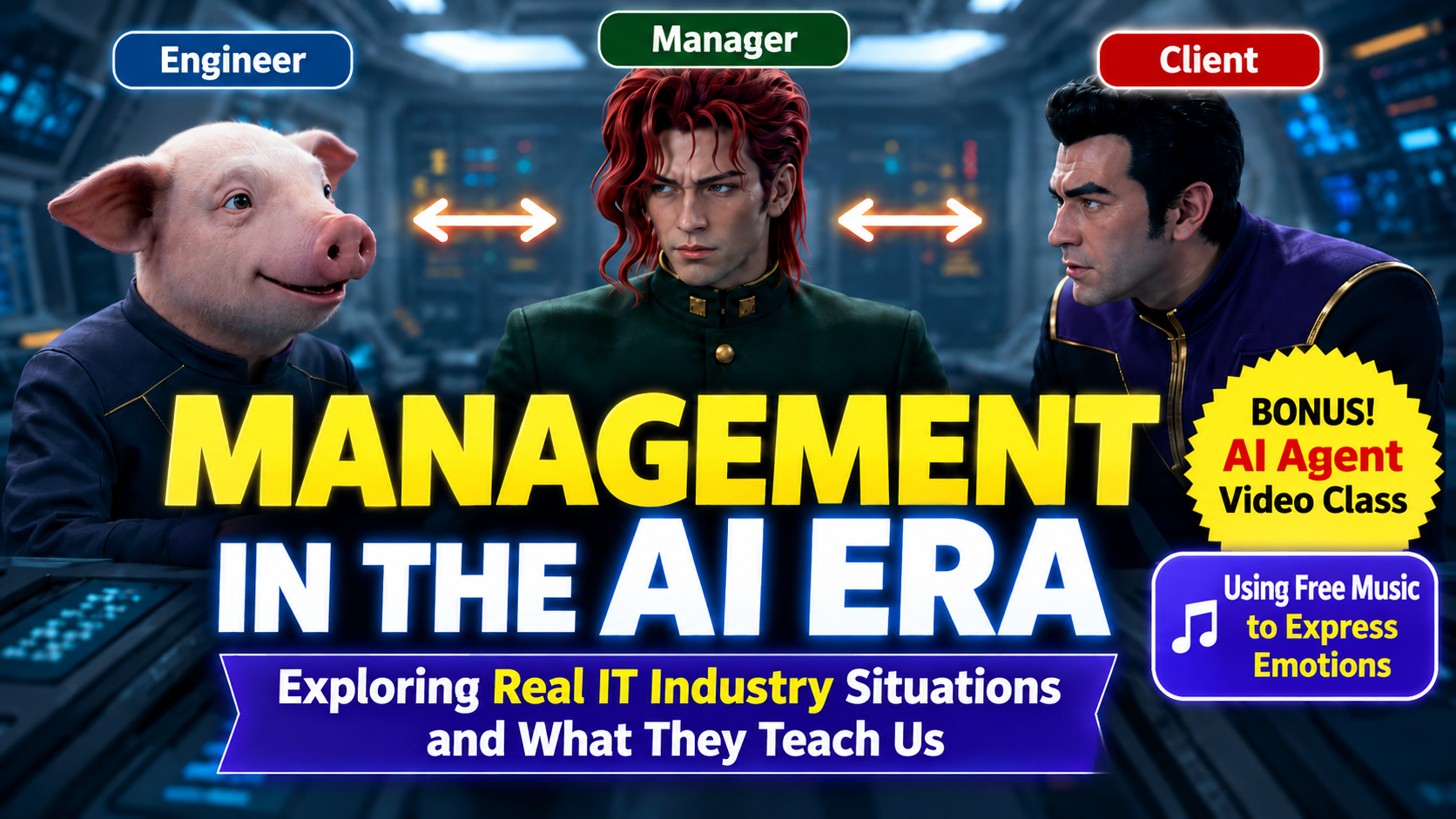
WATCH
HOW IT WAS MADE
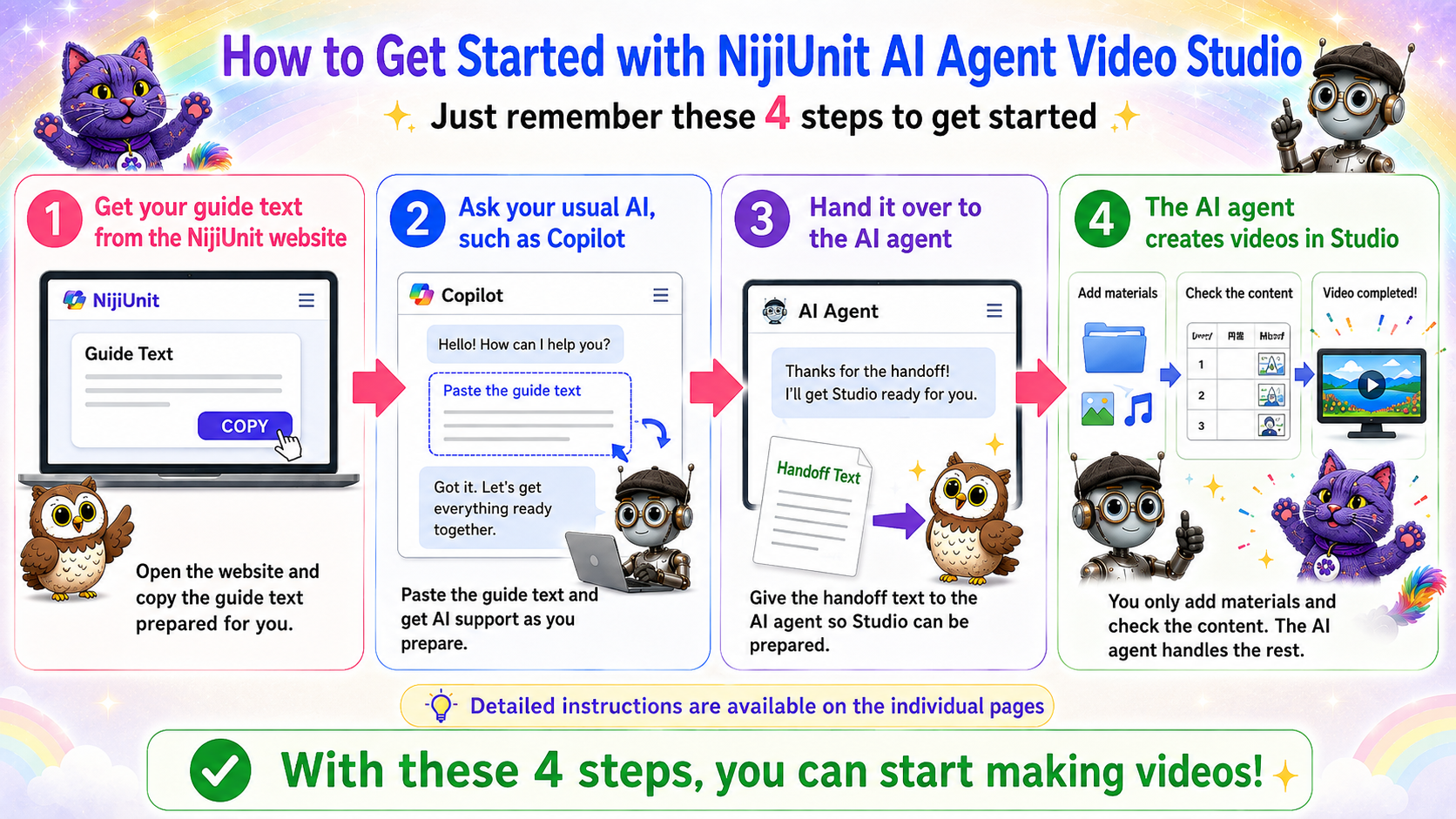
A person prepares the story and source materials and gives them to an AI agent. The AI agent creates a storyboard, and video generation begins only after the person reviews and approves it.
PRODUCTION MATERIALS
These are the materials used to create the 57-second, 19-shot story at the beginning of the video.
The rough first draft, the correction that added the PMO role, and the final story are shown separately.
Only the filenames and story roles of the character and robot images are listed.
The 57-second, 19-shot storyboard is not currently published.
Real production exchanges about the PMO correction, fixed three-person staging, free-music selection, and the final pause.
The video, dialogue voice, music, editing, and QA tools used for the 57-second, 19-shot opening story.
FOR YOUR AI AGENT
Copy the message below and give it to the AI you normally consult. No NijiUnit membership registration is required. The guide will help you prepare the desktop version of NijiUnit AI Agent Video Studio.
I want to use the 57-second story at the beginning of https://youtu.be/TvYgbJ8BY4s as a reference while creating a new video from my own story and source materials. First, run the repository prepare-tutorial command in English and validate the matching page at https://manual.nijiunit.com/en/tutorials/TvYgbJ8BY4s/. Read the page and every published document on it, then follow the AI agent guide. Do not reuse the original characters, story, or source materials. Use only a story and materials that I have the right to use. In the storyboard, confirm each character’s role, the direction in which information flows, and the characters’ positions during the conversation. If music is needed, do not lock in a track or timing first. Propose candidates based on the emotion the scene should convey, licensing conditions, and the relationship among dialogue, expression, and music. Begin by reviewing my story and source materials only. Do not generate video until I explicitly approve the Excel storyboard. Before any paid operation, explain what will run and the estimated cost, and obtain my approval.